
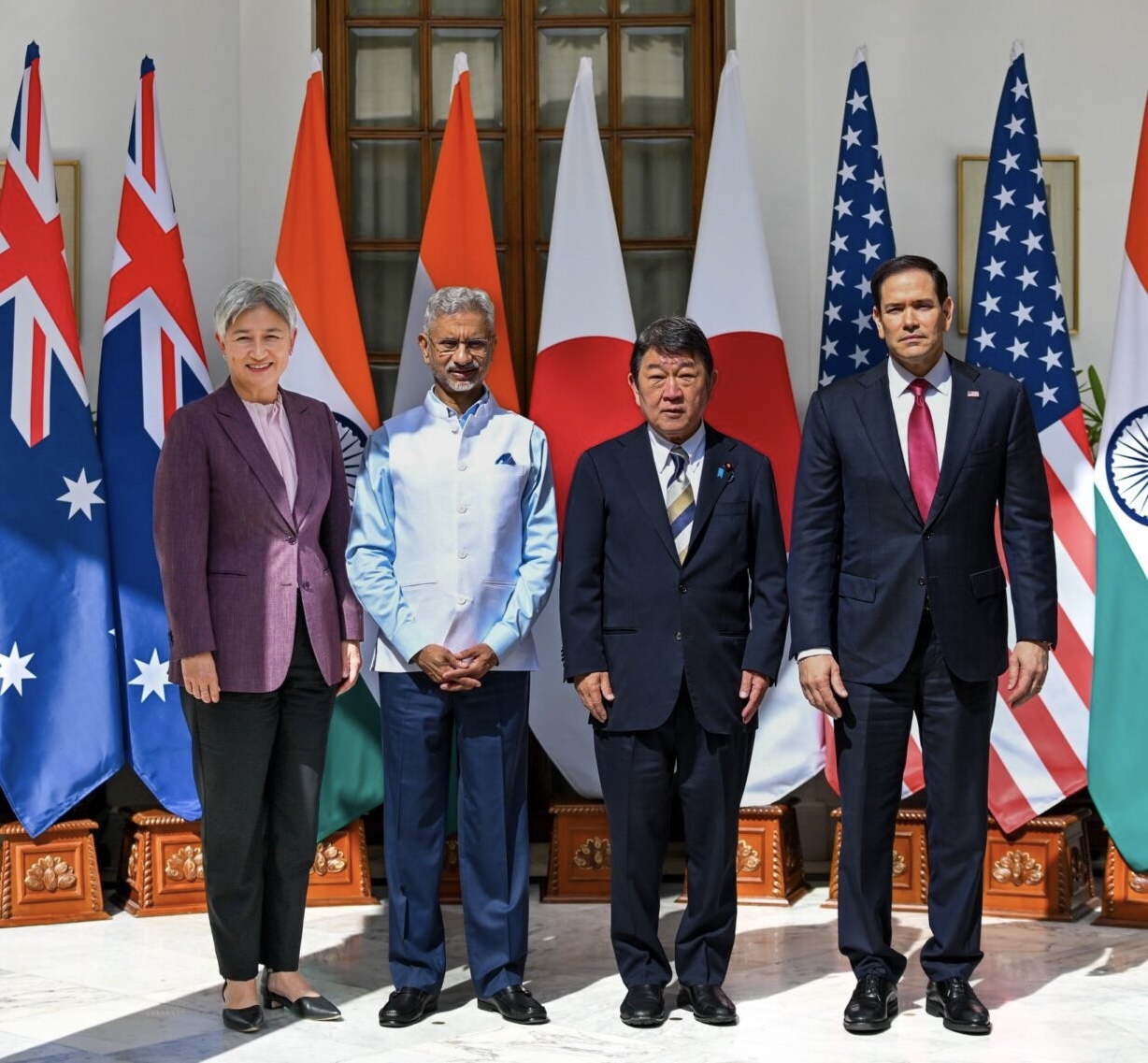
New Delhi — The foreign ministers of India, Australia, Japan, and the United States convened in New Delhi on 26th May for the first Quad meeting of 2026, unveiling a series of new initiatives on maritime security, energy, and critical mineral supply chains across the Indo-Pacific region.
A major project in Pacific that was announced was the Quad Ports of the Future Partnership.
The Quad will be launching a pilot for port infrastructure in Fiji, a joint port infrastructure project in the Pacific region, the first of its kind for the Quad.
Minister of Foreign Affairs of Australia Penny Wong said that It’s a practical demonstration of the Quads collective ability to deliver high quality, resilient infrastructure in partnership with the region and in response to Pacific priorities.
Yet the announcement came notably without a representative from Fiji present. The island nation has also been pursuing port development, with Prime Minister Sitiveni Rabuka previously proposing a project to China’s President Xi Jinping back in 2023. The absence of Pacific voices at the meeting raises questions about whether the initiative is as collaborative as it appears, or whether it signals a strategic move toward establishing a maritime base that could serve military purposes.
Foreign Minister Penny Wong underscored the urgency of the Quad’s work amid “acute economic stress” and regional instability, citing the closure of the Strait of Hormuz as a major energy security challenge. Wong announced the Quad Ports of the Future Partnership, beginning with a pilot project in Fiji, and detailed expanded maritime surveillance collaboration to combat illegal fishing and trafficking.
Secretary of State of the United States of America Marco Rubio emphasized that sixty percent of global maritime trade passes through the Indo-Pacific. “It is a vital national interest not just to the four countries represented here today but to countless countries around the world.”
The meeting concluded with the Quads shared commitment to deepen cooperation in an increasingly unpredictable global environment, even though no representatives from the Pacific region was present which also echoes historical justifications used by dominant superpowers to defend territorial ambitions.