
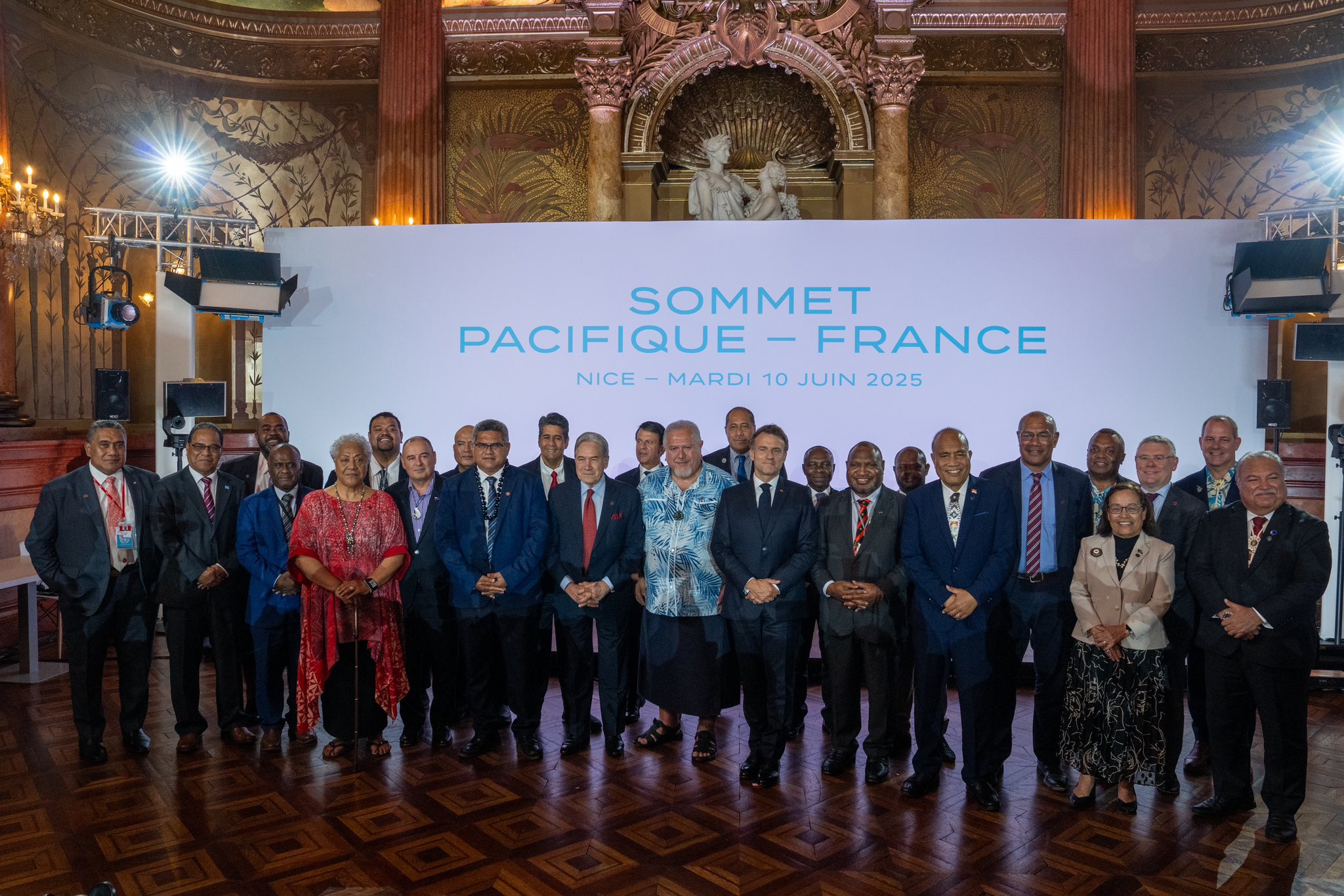
The 6th Pacific-France Summit concluded on the 10th of June in Nice France right after the UN Oceans Conference.
The summit provided an opportunity for open dialogue between Pacific Island nations, France and other stakeholders who came together under a single, urgent call: to protect the Pacific, its people, and the planet.
At the end of the summit, a declaration was drawn, which comprised of a shared dream ” A Blue Pacific Continent where peace, prosperity, and inclusiveness thrive.”
The summit also considers the grave threats that pose towards the declaration, and that is the accelerating climate crisis, rising seas, and a changing ocean that is affecting the region.
Various leaders from the Pacific Islands reaffirmed their stance to international cooperation, multilateralism, and rules-based global order, declaring that climate crisis as the defining challenge of their time.
These Island countries also made an urgent call to the world’s largest polluters to step up, enhance their climate commitments by September 2025, and steer the planet back on a path to limit warming to 1.5°C.
Pacific Island leaders reminded their counterparts at the summit how the ocean and climate are interconnected, raising alarms over threats like methane emissions, ocean acidification, and the collapse of coral reefs.
They voiced strong support for Australia’s bid to co-host COP31 with the Pacific, placing the region’s wisdom and experiences at the heart of global action.
Regional organisations like the Pacific Islands Forum, SPREP, and USP were praised for their behind-the-scenes work which powers cooperation and resilience towards efforts in tackling climate change.
Pacific Island leaders also applauded France’s growing role in the Pacific, not only in climate finance but also in education and disaster relief.
The summit concluded with all leaders declaring that:
- Climate justice must reflect vulnerability, not just GDP. They championed tools like the Multidimensional Vulnerability Index and celebrated initiatives like the KIWA Programme and the Pacific Resilience Facility, with France pledging €2 million to support local, nature-based climate solutions.
- Embraced the bold ambitions of the Nice Ocean Action Agenda, and the goal of protecting 30% of oceans and land by 2030, aligning with the Kunming-Montreal Biodiversity Framework. The BBNJ Agreement on marine biodiversity was marked as a milestone, and leaders pledged to swiftly ratify it.
- But the threats were not only environmental. Rising sea levels risk more than coastlines—they threaten statehood, identity, and legal rights. The summit called for international legal recognition of these threats and spotlighted Pacific leadership in advocating for global recognition of sea-level rise as a security and legal issue.
- Support IMO strategy for decarbonising shipping and stood united in the fight against plastic pollution, urging the creation of a Global Treaty to End Plastic Pollution.
- Forest conservation in Papua New Guinea, fairer financing, stronger infrastructure like greener ports and submarine cables, and the expansion of regional security cooperation were all declared essential. The summit acknowledged both traditional wisdom and modern science as equal partners in the region’s future.
- Humanitarian response through the FRANZ mechanism and climate prediction through early warning systems like CREWS and Weather Ready Pacific, the leaders affirmed the value of preparation, solidarity, and local knowledge.
- France’s new Oceanian Audiovisual Support Programme will help preserve and amplify Pacific voices, stories, and languages—recognising that resilience is not only physical but cultural and spiritual.